
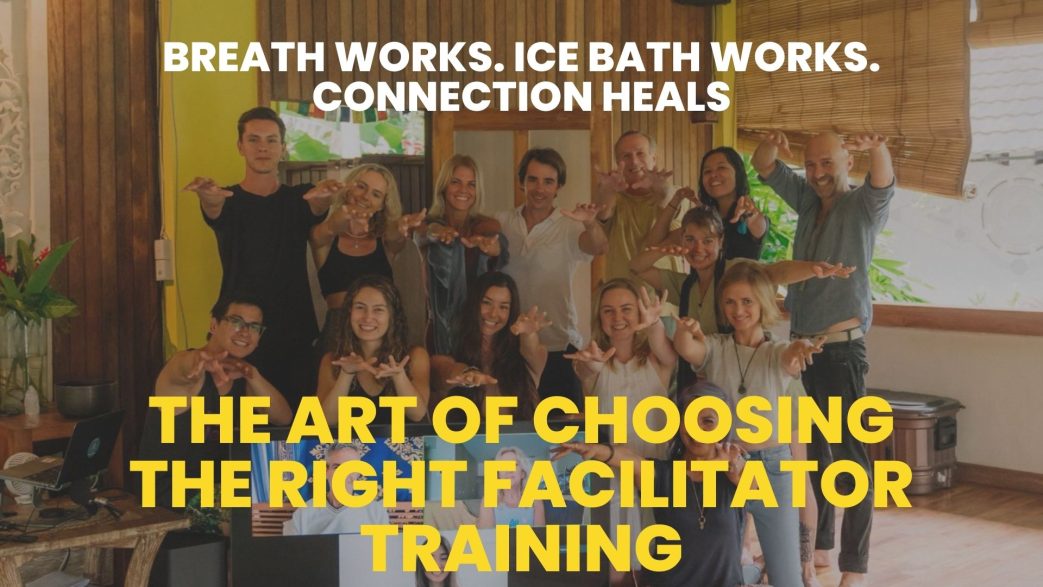
How to Choose the Right Breathwork Facilitator Training (A Practical Guide)
Over the past two years, Breathwork has exploded in popularity.
Every week, new breathwork certifications, immersive programs, and “fast-track facilitator trainings” appear online. Social media is filled with powerful testimonials, emotional breakthroughs, and beautifully produced marketing campaigns promising rapid transformation.
This growth reflects a genuine desire for healing, embodiment, and nervous system regulation.
But it also brings something important to name:
Not all breathwork trainings are safe.
Not all are ethical.
Not all are trauma-informed.
Some look extraordinary online.
Some promise rapid breakthroughs.
Some offer quick breathwork certifications with bold claims.
But strong marketing does not equal strong ethics.
Intensity does not equal safety.
Charisma does not equal competence.
I have seen offerings that did not feel grounded, trauma-informed, or responsibly structured — yet people enrolled because the messaging was persuasive. I have been contacted by over a dozen re-traumatized people after a Breathwork session.
So here is a practical guide to help you choose the right breathwork facilitator training for you.
Because becoming a breathwork facilitator is not just about learning techniques.
It is about learning how to hold human vulnerability with integrity.

1. Start With Alignment
Get to Know the Lead Trainer
Before enrolling in any breathwork certification program, immerse yourself in the trainer’s work.
-
Watch their videos
-
Listen to interviews or podcasts
-
Read their writing
-
Observe how they communicate about trauma, safety, and ethics
You will likely spend months — sometimes years — connected to this trainer and their community.
Ask yourself:
-
Do I feel safe in their presence?
-
Do they embody nervous system regulation?
-
Do they demonstrate humility and accountability?
-
Are they transparent about their limitations?
-
Do they continue learning and evolving?
In ethical facilitator training, alignment matters more than reputation.
Is There a Real Graduate Community?
A breathwork certification without integration is incomplete.
Look for:
-
An active graduate community
-
Ongoing mentorship or supervision
-
Regular integration calls
-
Opportunities to practice and receive feedback
-
Testimonials that speak about long-term growth — not just peak experiences
Transformation is measured months later, not during the intensity of the training.
A strong breathwork training program supports you beyond certification.

2. Does the Training Truly Teach You How to Facilitate?
Experiencing breathwork is not the same as learning to guide it.
A professional breathwork facilitator training should teach you:
-
How to facilitate group breathwork sessions
-
How to facilitate 1:1 breathwork sessions
-
How to safely open and close a container
-
How to manage group dynamics
-
How to respond to unexpected emotional reactions
If a training focuses only on personal experience but not on safe facilitation skills, it is incomplete.
Safe Framing & Nervous System Literacy
High-quality trauma-informed breathwork training includes:
-
Pendulation
-
Titration
-
Window of tolerance
-
Nervous system responses (fight, flight, freeze, fawn)
-
Attunement skills
-
Safe trauma release principles
Facilitators must know how to:
-
Support without pushing
-
Recognize overwhelm
-
Slow down when needed
-
Back off when someone is not ready
-
Help participants remain in control of their experience
Breathwork is about allowing — never forcing.
Without nervous system literacy, facilitation can become unsafe.

Health Screening & Breathwork Contraindications
Responsible breathwork certification programs teach:
-
Medical contraindications for connected breathwork
-
How to properly screen participants
-
How to provide safer alternatives
-
How to assess client suitability
Participants must be informed about possible effects during AND after a session so they can make an informed choice.
Ethical breathwork facilitation prioritizes safety over intensity.
Anatomy, Physiology & Trauma Theory
A strong breathwork facilitator training should include education on:
-
What happens in the brain during breathwork
-
Basic respiratory physiology
-
Autonomic nervous system regulation
-
Trauma theory
-
The difference between catharsis and integration
-
How to handle extreme reactions safely
If a training ignores science, physiology, or trauma-informed principles, it is not comprehensive.
3. Client Suitability & Ethical Inclusion
A strong ethical foundation includes:
-
Assessing a client’s ability to integrate a breathwork session
-
Screening responsibly
-
Not discriminating based on race, ethnicity, gender, religion, sexual orientation, age, or appearance
Observe how the trainer communicates publicly. Inclusion and respect should be visible in action, not just words.
4. Clear Contracts & Professional Transparency
Professionalism is essential in breathwork training.
You should learn how to:
-
Establish clear agreements about number and duration of sessions
-
Be transparent about financial terms
-
Avoid hidden costs
-
Obtain consent for additional techniques (touch, movement, cold exposure, etc.)
-
Maintain confidentiality
-
Create clear safety guidelines
If financial structures are vague or unclear, consider that a red flag.
Ethical facilitator training prepares you to operate responsibly from day one.
5. Practitioner Competence
The trainer should:
-
Stay within their window of competence
-
Be honest when they do not know something
-
Continue developing personally
-
Practice the breathwork methods they teach
-
Maintain balance and self-care
-
Have mentors or supervision
No breathwork facilitator should operate without support.
6. Practitioner–Client Relationship
A trauma-informed breathwork training must emphasize:
-
Healthy professional boundaries
-
Respect for client dignity
-
No exploitation of power dynamics
-
No promotion of personal religious beliefs through the practice
-
Zero tolerance for sexual misconduct
-
Referring clients to appropriate professionals when needed
-
Respecting scope of practice
Ethics are not optional in breathwork facilitation.
They are foundational.
7. Practitioner Interrelationships
A healthy training ecosystem:
-
Maintains respectful relationships with graduates
-
Encourages collaboration over competition
-
Nurtures relationships with other breathwork trainers
-
Models humility within the wider field
How trainers relate to peers reflects how they relate to students.
Final Reflection: Choosing a Trauma-Informed Breathwork Training
A breathwork facilitator training should not simply certify you.
It should:
-
Deepen your integrity
-
Strengthen your nervous system awareness
-
Expand your ethical responsibility
-
Anchor you in humility
-
Prepare you to hold emotional processes safely
The breath is powerful.
So is influence.
Choose a breathwork training that teaches you to handle both with care.
If you are exploring breathwork facilitator training in Bali, India, or online, get in touch and you can be reassured we prioritize trauma-informed principles, ethical boundaries, and nervous system safety above marketing promises.
That is where real facilitation begins.
www.breathingcoldbali.com